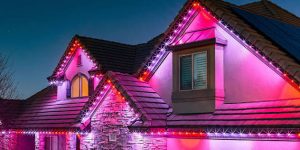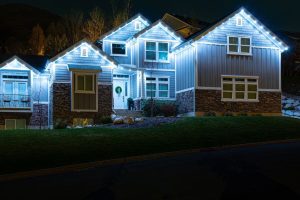

Let’s be real—brilliant holiday lighting doesn’t have to come with a shocking electric bill. It should transform your home into a year-round showpiece with different lighting options & patterns—without year-round expense.
However, it’s not that simple. Choosing permanent LED lights for year-round use comes with great electricity costs. Homeowners in Dallas often wonder, “How much will this cost me?” and “How much do Christmas lights add to electric bill?” and have so many concerns and questions.
Getting stunning brilliance at a fraction of the power is not easy today, as you don’t want to inflate your utility costs, which disturb your entire budget. So, the question is, how can you create an unforgettable curb appeal while keeping your electricity usage surprisingly low?
So, if you are also one of those who want festive light displays for every season but don’t want high electricity bills, this blog post is for you.
Are Christmas Lights Expensive to Run?
Homeowners in Texas want beautiful yet elegant outdoor lights for every season, especially Christmas. But just like others, they are afraid of those high electricity bills and think these lights are expensive to run.
But is it really true? Do Christmas lights use a lot of electricity?
Your short answer is “No.” Modern lights do not use a lot of electricity. However, old incandescent lights may use much more electricity than you think.
The major element is the type of lights you are using.
Let’s break it down in detail.
LED vs Incandescent Lights – Understand the Difference
There are two main types of traditional Christmas lights.
- Incandescent lights
- LED Christmas lights
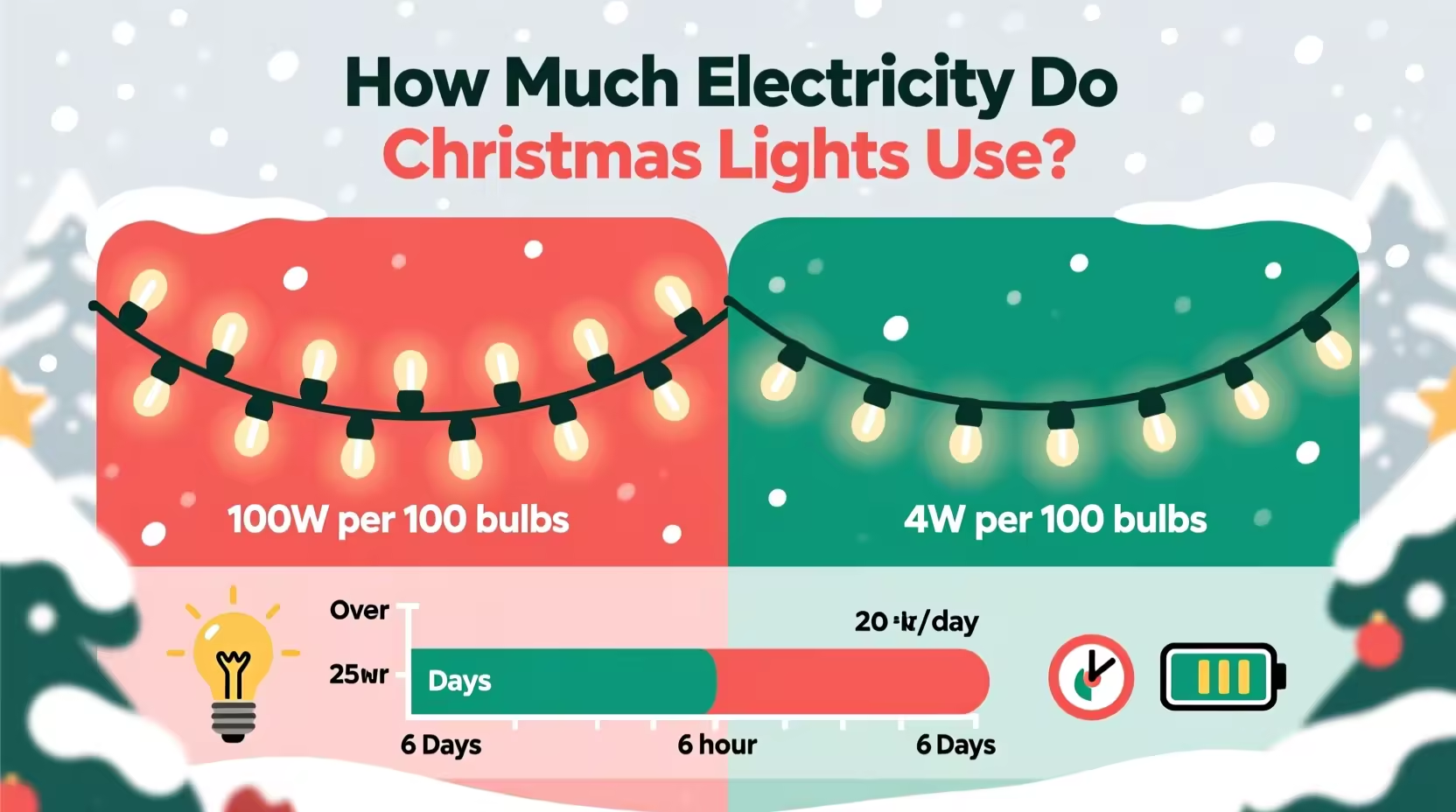
Incandescent lights are beautiful, warm-glow lights that have thin filaments that heat up to produce light. They use a lot of electricity than LED lights. For example:
100-bulb strand = about 40 watts
Now, come to LED lights. LED means light-emitting diode. They use far less electricity and stay cool to the touch. Also, they last much longer than incandescent lights. Their power use is:
100-bulb LED strand = about 4 to 7 watts
This means that LED Christmas lights’ energy use is 90% less than that of incandescent lights.
So, What Does Watt Mean for Your Bill?
The electric bill charges are based on:
- Kilowatt-hours (kWh)
- 1 kilowatt = 1,000 watts
- 1 kWh = running 1,000 watts for 1 hour
But in Texas, homeowners pay around:
- $0.12–$0.16 per kWh
For easy math, we’ll use $0.15 per kWh.
For example, there is one strand of LED lights
- 1 strand
- 100 LED bulbs
- 5 watts’ total
- Running 6 hours per night
Daily electricity use?
5 watts × 6 hours = 30 watt-hours
30 watt-hours = 0.03 kWh
Cost per day:
0.03 kWh × $0.15 = $0.0045 per day
That’s less than half a penny.
Monthly Costs?
- $0.0045 × 30 = $0.13 per month
- Yes — thirteen cents.
45 Day Holiday Season
- $0.0045 × 45 = $0.20 total
What If You Have 10 Strands?
This is where the difference becomes real.
10 LED Strands
- 5 watts each
- 50 watts total
Daily use:
50 watts × 6 hours = 300 watt-hours = 0.3 kWh
Cost per day:
- 0.3 × $0.15 = $0.045 per day
Season total (45 days):
- $0.045 × 45 = $2.03
This is about $2 for the entire holiday season.
What If You Go Big?
Let’s say you love decorating the entire exterior area:
- Roofline lights
- Tree wrapping
- Bushes
- Garland
- Walkway lights
You might use:
25 strands
For these 25 LED strands:
- 125 watts total
- 6 hours per night
Daily use:
- 125 × 6 = 750 watt-hours = 0.75 kWh
Cost per day:
- 0.75 × $0.15 = $0.11 per day
Season total:
- $0.11 × 45 = $4.95
Under $5 for the entire season.
What If There Are 25 Incandescent Strands?
Christmas lights wattage for 25 incandescent strands:
- 1,000 watts total (1 kW)
Daily use:
- 1 kW × 6 hours = 6 kWh
Cost per day:
- 6 × $0.15 = $0.90 per day
Season total:
- $0.90 × 45 = $40.50
The difference is quite noticeable.
What About Professional Permanent Christmas Lights?
Now this is where professional systems like Trimlight shine.
With a permanent LED lighting system, you can enjoy:
- Commercial-grade LEDs
- Highly efficient diodes
- Low wattage per foot
Many systems average
- 3–5 watts per linear foot
- Often lower when dimmed
Since LED lights are dimmable:
- You control brightness
- You control energy use
- You control cost
How to Keep Christmas Lights’ Electric Cost Low?
If you want to keep the costs low, follow these tips:
- Use LED lights only
- Set a timer
- Turn lights off after midnight
- Avoid mixing incandescent strands into LED setups
- Don’t over-brighten when dimming works fine
How Christmas Lights Power Usage Time Changes Everything?
That’s something many homeowners overlook:
Run time matters more than you think. For example, you can compare 6 hours vs. 12 hours per night.
10 LED Strands
6 hours:
- ~$2 per season
12 hours:
- ~$4 per season
Still affordable to consider.
10 Incandescent Strands
6 hours:
- ~$16 per season
12 hours:
- ~$32 per season
Doubling your runtime doubles your cost.
This is why timers are so important.
How to Estimate My Christmas Lights’ Power Cost?
Follow this formula to calculate holiday lights electricity cost:
- Add up total watts
- Multiply by hours per night
- Divide by 1,000
- Multiply by your electricity rate
Final Thoughts—How Much Do Christmas Lights Cost to Run?
We hope that now you have a clear idea about how much do Christmas lights cost to run.
At the end of the day, Christmas lights are far more affordable to run than most homeowners think — especially when you’re using modern LED technology. A beautifully lit home doesn’t have to mean a shocking electric bill, and with smart usage, timers, and energy-efficient systems, you can enjoy the glow all season long without financial stress.
If you’re ready for a cleaner, safer, and more permanent lighting solution that combines stunning curb appeal with low operating costs, Trimlight DFW is here to help you celebrate brighter, smarter, and with total confidence.