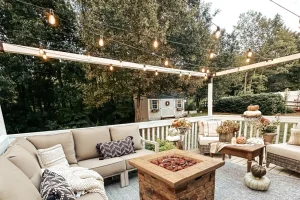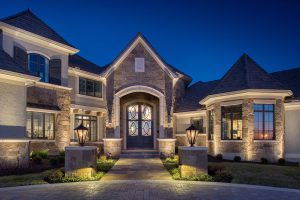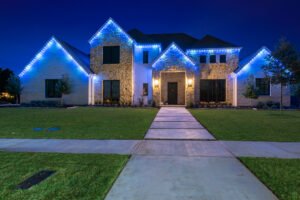
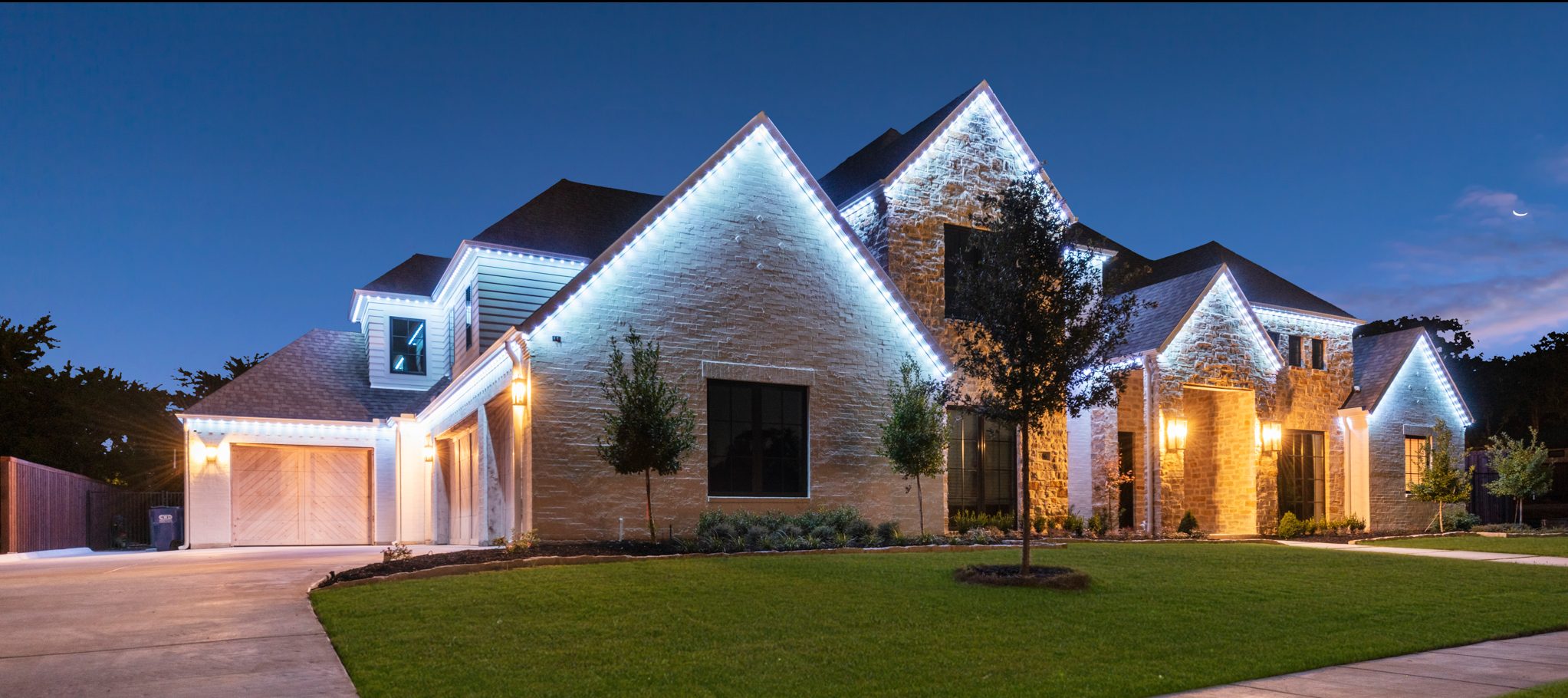

Professionally installed Christmas lighting elevates your home instantly, which means no ladders, no tangled wires, and no frustration. Result? A well-lit home that becomes the highlight of the neighborhood.
But have you ever thought about how much electricity your Christmas lights are actually using every night? Smart homeowners are switching to lighting that works harder while using less power. Yes, that’s true. Modern LED technology delivers brilliance without the burden of high wattage. So, before decorating their home with beautiful, fancy lights, homeowners often ask, “How many watts do Christmas lights use?”
If you are also looking for the answer, this blog post is for you. Today, we will talk about Christmas lights wattage and much more, so you can decorate confidently & safely.
Why Does Wattage Matter?
Before we dive deep, it’s important to understand why wattage even matters.
The fact is, wattage determines how much electricity your lights consume, which also affects your monthly bill. It determines how many strands you can connect safely and how it impacts the load on your home’s electrical circuits.
How Many Watts Do Incandescent Christmas Lights Use?
First, we will talk about those “old school” lights—the traditional incandescent lights.
Mini Incandescent Lights
- 0.4 to 0.5 watts per bulb
- A 100-bulb strand uses about 40–50 watts
- 10 strands? That’s 400–500 watts
The interesting thing is that’s the same energy usage as running:
- A desktop computer
- A large TV
- Several ceiling fans
Now what about larger C7 and C9 incandescent bulbs? Well, these bulbs are bigger roofline bulbs.
- C7 bulb: 5 watts per bulb
- C9 bulb: 7 watts per bulb
For example, you have decorated 100 C9 bulbs on the roofline:
- 100 bulbs × 7 watts = 700 watts
So, if you run them 6 hours a night for 30 days:
- 700 watts × 6 hours × 30 days = 126,000 watt-hours
- That equals 126 kilowatt-hours (kWh)
It could noticeably impact your electricity bill.
How Many Watts Do LED Christmas Lights Use?
Now we will explore the LED Christmas lights’ wattage, which uses up to 90% less electricity than incandescent lights.
Mini LED Lights
- 0.04 to 0.08 watts per bulb
- A 100-bulb strand uses 4–8 watts
Now that’s a significant difference
Let’s compare this:
- Incandescent strand: 40–50 watts
- LED strand: 4–8 watts
You can even run 10 LED strands for less power than 1 incandescent strand. Surprised, huh?
LED C7 and C9 Bulbs
These two options are quite popular for rooflines:
- LED C7: 0.5–1 watt per bulb
- LED C9: 0.6–1 watt per bulb
Use the same 100-bulb example to understand
- 100 LED C9 bulbs × 0.8 watts = 80 watts
Compare that to 700 watts for incandescent C9s, which is nearly a 620-watt difference.
LED vs. Incandescent Christmas Lights Energy Usage—A Quick Comparison
Let’s get the analysis in this quick comparison:
Types of lights |
Bulb count |
Watts per bulb |
Total watts per 100 bulbs |
Energy-efficiency level |
| Incandescent mini lights | 100 | 0.4 – 0.5 W | 40–50 W | Low |
| LED mini lights | 100 | 0.04 – 0.08 W | 4–8 W | Very high |
| Incandescent C7 bulbs | 100 | ~5 W | ~500 W | Low |
| Incandescent C9 bulbs | 100 | ~7 W | ~700 W | Low |
| LED C7 bulbs | 100 | 0.5 – 1 W | 50–100 W | High |
| LED C9 bulbs | 100 | 0.6 – 1 W | 60–100 W | Very high |
How Much Do Christmas Lights Cost to Run?
According to an estimate, electricity rates run between $0.12 and $0.15 per kWh in Dallas. For example, there are 1000 incandescent mini lights:
- About 400 watts total
- Run 6 hours per day
- For 30 days
400 watts × 6 × 30 = 72,000 watt-hours = 72 kWh.
So, at $0.14 per kWh = $10.08 for the month
Now, let’s take an example of 1000 mini LED bulbs
- About 50 watts total
- Same 6 hours per day
- Same 30 days
50 × 6 × 30 = 9,000 watt-hours = 9 kWh
At $0.14 per kWh = about $1.26 for the month
That’s such a huge difference, right?
Why Do Old Christmas Lights Use a Lot of Power?
Incandescent bulbs:
- Produce light by heating a filament
- Waste energy as heat
- Burn out more quickly
- Get hot to the touch
LED lights:
- Use semiconductors to produce light
- Stay cool
- Last significantly longer
- Use a fraction of the energy
Based on the fact, LEDs can usually last up to 25,000-50,000 hours.
How Many Strands Can Be Connected Together?
Incandescent
- Usually 3–5 strands max
- Higher risk of overheating
LED
- Often, 20–40 strands can be connected
- Much lower power draw
- Safer overall
Make sure you are fully aware of the manufacturer’s guidelines.
Should You Use Permanent Holiday Lights?
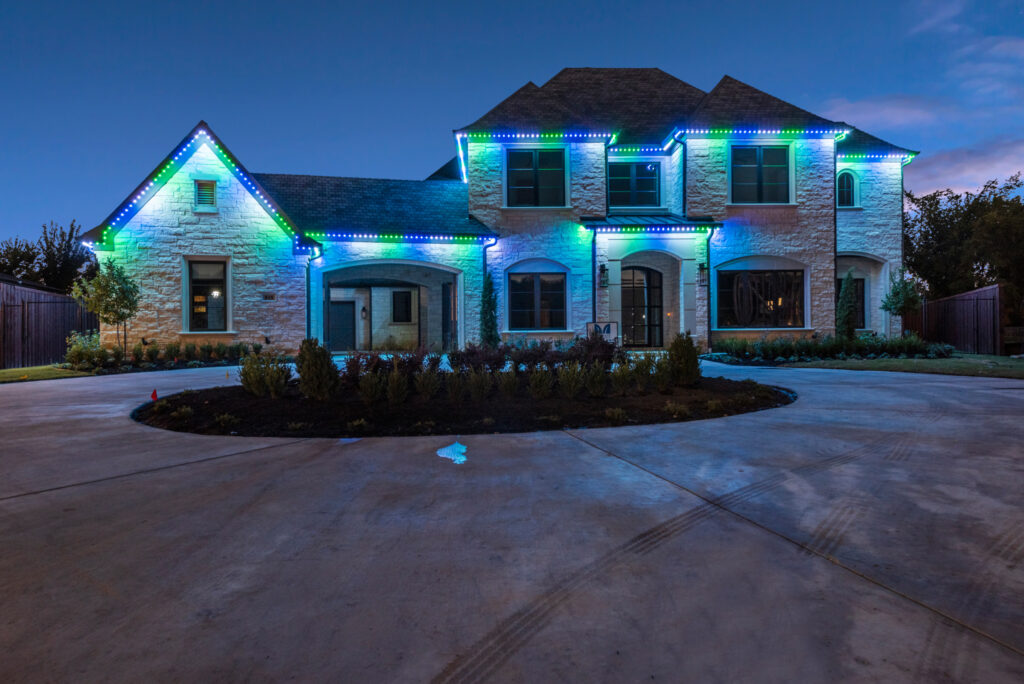
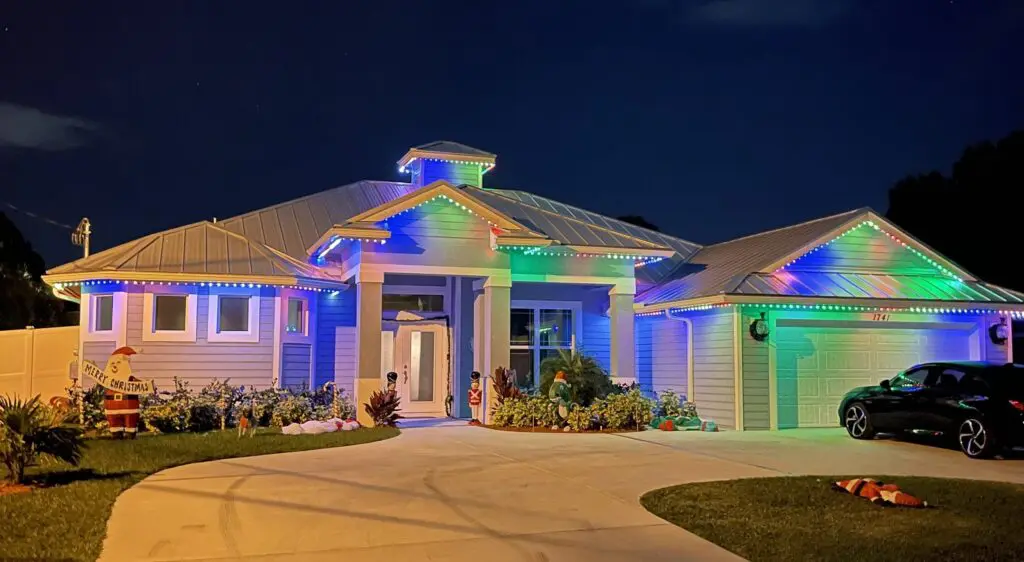
Of course. That’s exactly where Trimlight DFW changes the game. The company offers high-quality programmable permanent Christmas lights. Some of their features are
- Commercial-grade LEDs
- Professionally installed
- Colorful & programmable
- Use low wattage
Even a full home installation uses less power than a small incandescent bulb.
How Can You Reduce Christmas Lights’ Energy Usage?
Everybody wants a festive yet affordable display. But that comes with some important steps, like
- Switch to LED lights
- Use timers
- Turn lights off before bed
- Avoid overloading one circuit
- Consider permanent LED systems
According to homeowners in Dallas, a timer alone can reduce costs by 40-55%.
Are LED Christmas Lights Brighter?
Yes.
Modern LED lights:
- Produce vibrant colors
- Offer consistent brightness
- Don’t dim over long runs
- Are available in warm white
Safety Considerations in Dallas’s Weather
In Dallas, holiday lights face:
- Wind
- Rain
- Occasional ice
Temperature swings
LED lights are:
- More durable
- More weather-resistant
- Less likely to fail in cold temperatures
Final Thoughts
Alright, so here is a top consideration when it comes to choosing Christmas lights: decide between incandescent lights or permanent LED lights. Either choice can greatly affect how much electricity your Christmas lights cost to operate every month. LEDs consume much less energy to create the same, or sometimes even brighter and more saturated, glow of color.
If you want to have an eye-popping home for the holidays without the risk of tripping breakers or higher electric bills, then switching to LED lights is your best option. Better yet, having permanent LED lights professionally installed is a great way to save time and avoid hassle in the season to come.
Holiday lighting should be fun and festive, and not a hassle. In this day and age, you certainly don’t have to sacrifice energy efficiency if you want a desirable, prominent holiday lighting display that improves your home’s curb appeal. You really can enjoy both.