
Finally, you installed your trim light system for the holidays, which looks great. Children are happy, the house is shining, and everything is working smoothly as it should.
But one evening, you pulled into the driveway and noticed one bulb was not turning on. Naturally, the first thought that comes to mind is, “Oh no, do I have to replace the whole system?”
Luckily, not at all. A single trimlight bulb going out is probably not a big deal. In fact, this is one of the biggest advantages of a trimlight system: you don’t have to deal with the constant maintenance that comes with traditional string lights.
A little troubleshooting can identify the issue and help solve the problem easily. And if the problem needs some personal attention, then the technicians can come and handle everything quickly & professionally.
But the question is, what actually happens when the Trimlight system goes out? What elements can be safely checked at home? And when to call the professional?
First Things First—Why Does a Trimlight Bulb Go Out?
Before we talk about fixing the bulb, it’s important to highlight some causes:
Some usual suspects are
-
A loose connector
Temperature swings can shift things over time.
-
A single diode failure
One tiny LED inside a node fails. The spot looks dim, not dark.
-
Water intrusion
Rare, but possible if a connector wasn’t fully snapped in.
-
A power supply issue
Sometimes it’s not the bulb—it’s the transformer or controller.
-
Critters
Squirrels, birds, and the occasional raccoon get curious.
Now, all of these causes are not catastrophic. These are some small but common causes that can create issues with the bulbs.
Trimlight Maintenance and Repair—What Should You Do When One Trimlight Bulb Goes Out?
Before you go and grab the tools or a ladder, make sure you start with the basics.
By doing this, you can identify a simple issue without doing anything complicated.
Step 1 – Check the Rest of the Lights
Start by looking at your entire lighting system.
Ask yourself:
Is it just one light?
Or are several lights out?
If it’s only one:
- The individual LED could be the problem.
- A local connection could be loose.
- The issue may be relatively minor.
However, if the entire section is dark, then look for a broad connection issue or check whether the system is receiving power.
Step 2 – Check Whether the System is Powered
Well, it sounds quite obvious, but you may be surprised to know that sometimes the simplest things get overlooked.
So, always check whether:
- The lighting system has power.
- The controller appears to be operating normally.
- Other lights are responding.
- Any relevant switches have been turned off.
However, if the entire system is dark, then don’t immediately assume that every LED has failed. The problem could be somewhere else.
Step 3 – Check App or Other Controls
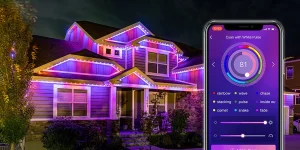
Another amazing perk of choosing a Trimlight system is that you can control the entire system using a simple mobile app. You can even change its colors, patterns, and entire settings depending on the occasion.
One can also change:
- Colors
- Lighting effects
- Brightness
- On/off settings
After checking, you can analyze whether the affected light is turning on or not. If every other light changes colors but one specific light is not on, then the answer is clear.
Is it Possible to Fix a Trimlight Bulb Yourself?
Yes, you can manage LED light troubleshooting yourself at home.
However, you need to understand the important difference between troubleshooting and repairing electrical equipment.
Opening electrical equipment or cutting wires is something you can’t do without professional help.
DIY troubleshooting involves some simple steps:
- Confirming the system has power.
- Checking your lighting controls.
- Testing different colors or settings.
- Seeing whether other lights are affected.
- Looking for physical damage from the ground.
Now that’s where you need to stop. Don’t become an electrician and handle complicated jobs just because of one damaged LED bulb.
What Should You NOT Do Yourself?
Permanent outdoor lights are installed in places where it’s not easy to reach for a common person.
You may feel tempted to
- Climb onto the roof.
- Pull on wiring.
- Cut a cable.
- Open electrical components.
- Replace parts with random alternatives.
- Modify connections.
- Use makeshift repairs.
Don’t do this ever.
If the lights are difficult to access or you may fail to understand the problem, then call a professional to handle things.
When Should You Call a Trimlight Professional?
Call a professional if:
-
Multiple Lights Are Out
Several lights going dark may point to a larger system issue.
-
Lights Keep Flickering
Frequent flickering could indicate a connection or wiring problem.
-
Lights Act Strangely
Wrong colors, random changes, or unresponsive lights need attention.
-
Visible Damage
Storms, debris, or impact may damage lights or connections.
-
Electrical Problems
Wiring or power issues should always be handled by a professional.
-
DIY Troubleshooting Fails
If simple fixes don’t work, it’s time to call an expert.
How to Fix Permanent LED Lights?
Follow these instructions to fix permanent LED lights:
-
Check the Power
Make sure the system is receiving power.
-
Check Connections
Look for loose or damaged connections.
-
Test the Controls
Try changing colors, brightness, or settings.
-
Reset the System
Follow the manufacturer’s reset instructions.
-
Inspect for Damage
Check for visible storms or physical damage.
-
Call a Professional
Get expert help for wiring or complex issues.
Traditional String Lights Vs. Permanent LED Lighting
Check out the comparison below to understand the difference between traditional string lights and permanent LED lighting.
| Traditional string lights | Permanent Trimlight |
| Installed seasonally | Installed permanently |
| Requires annual setup | No yearly installation |
| Requires annual removal | No yearly removal |
| Strands can become tangled | No tangled storage |
| Individual bulbs and strands need checking | Occasional troubleshooting may be needed |
| Storage is required | No seasonal storage |
| Installation involves climbing ladders | One-time professional installation |
Do Permanent Lights Need Maintenance?
No. For most homeowners, permanent lighting is not something that needs constant maintenance.
The attractive part is
- You don’t need to schedule weekly lighting inspections.
- You don’t need to remove the system every January.
- You don’t need to test every bulb before every holiday.
Maintenance is generally as needed. Especially if everything is working normally.
How to Clean Permanent Outdoor Lights?
Cleaning permanent outdoor lights is a straightforward process. Just remember these elements:
- Remove dust & debris
- Use a soft cloth
- Avoid harsh chemicals
- Clean after storms
- Check for damages
- Keep them clear
By following these simple tips, your outdoor lights may look great even after years.
Bottom Line
A Trimlight bulb going out isn’t the disaster it feels like in the moment.
The system was built to isolate problems, make them easy to diagnose, and easy to fix—without turning your yard into a project.
Compare that to the yearly string-light ritual, and it’s really not close.
In the DFW area and dealing with a dark spot? Or just want a seasonal check-up?
Trimlight DFW is happy to take a look. Sometimes it’s a two-minute fix. Sometimes it needs an experienced eye.